
Share Dr. Han S. Park's obituary with others.
Invite friends and family to read the obituary and add memories.
Stay updated
We'll notify you when service details or new memories are added.
You're now following this obituary
We'll email you when there are updates.
Select your format and elements to print

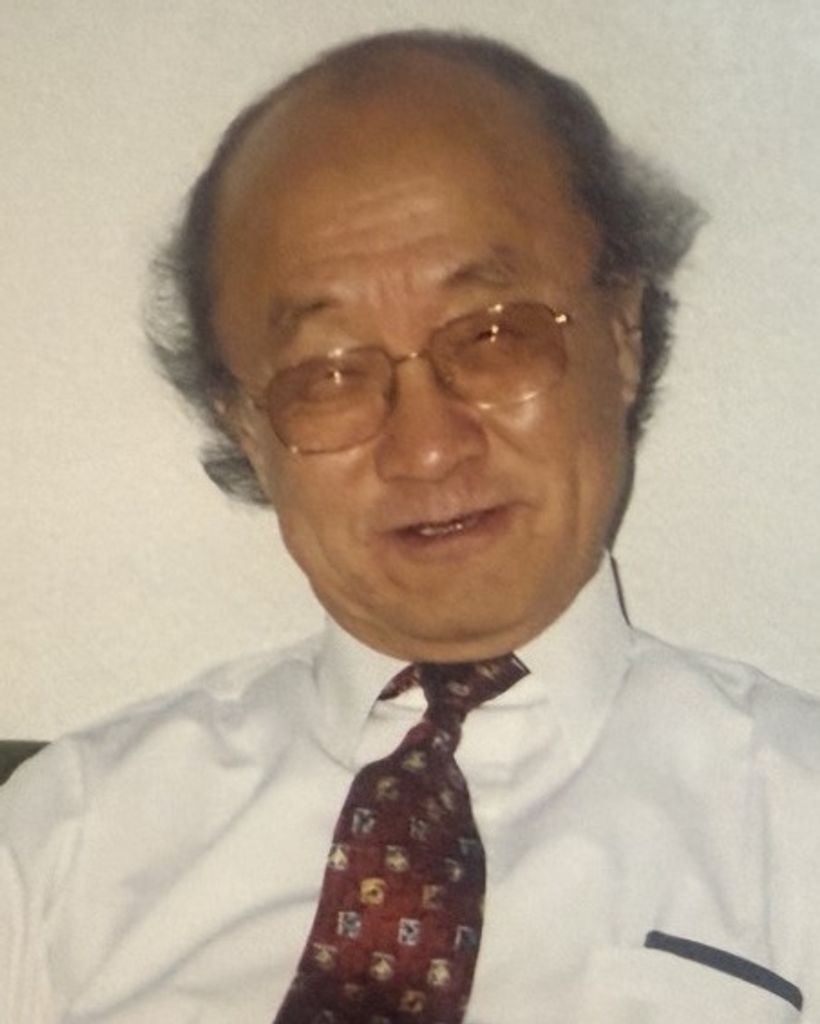
Dr. Han S. Park
Jan 6, 1939 — Jan 21, 2026
Evans


Dr. Han S. Park
Han Shik Park was born on January 6, 1939, in Harbin China. His parents were Young Suk Park and Dong Soo Lee. He was the third child of six surviving children, he had two brothers and three sisters. He and his Korean immigrant family fled China during the Cultural Revolution. Upon arriving in Korea, his family endured further hardship and similar threats with the onset of the Korean War. He attended high school in Daegu, excelled as a student and nationally awarded public speaker, and attended Seoul National University. His years spent enduring tragedies of war led him to study political science. He met his future wife Sung Won Juhn in high school, and they were engaged after college.
In 1965 at the age of 26, he came to the U.S. and married Sung Won (Wonie) in Washington, D.C. where he earned his master’s degree at American University and worked as a bus boy to earn extra money. Their daughter Clara was born shortly before moving to Minnesota in 1967, where Han earned his Ph.D at the University of Minnesota. In 1970 Han was hired at the University of Georgia Department of Political Science, where he was one of the very first minority faculty hires at the university.
Upon arriving in Athens, their son Kenneth was born, and they began building a busy life in Athens. Although he was appointed faculty at UGA during a time of civil rights and Vietnam War tension, Han embraced the opportunity to make an impact as a Korean immigrant living in the deep South. He believed that “America’s true strength lies in its ability to accommodate different perspectives…and it is this diversity that allows America to be uniquely positioned as a global peacemaker.” Han’s childhood experiences with war defined his life’s mission to serve humanity and peace. After marrying Wonie, he embraced the teachings of Christ, which grounded their new life together. He believed Christian love was so huge that it could encompass the Buddha he grew up with. Their third child Sharon was born in 1976, as Han continued to develop his theories of Human Needs and defining Peace in a deeper way. Early in his career, Han founded Uniting Families, Inc., a nonprofit dedicated to finding family members separated by war. He successfully reunited hundreds of family members in China and North/South Korea, and he himself was finally reunited with many of his own family members in China, after decades being forced apart and lost to each other.
As founding director of GLOBIS, Han influenced generations of students with his philosophy of peace. He challenged students to think of peace as much more than a response toward conflict resolution. “Peace is Harmony, and harmony is defined as many differences coming together for a unified whole”. As his travels to the Far East and abroad increased, he advocated for efforts to understand other countries through their own historical and cultural context, beyond a Western lens. The study abroad programs during his time as director of GLOBIS expanded into countries in Europe, Asia, and South Africa. In his rare spare time, he relaxed with family, playing ping pong, singing Karaoke, and following his beloved UGA Bulldogs.
Throughout his 45-year career at UGA, he held numerous Track II diplomacy conferences with scholars, experts, and government officials. His origins in China and Korea, and his Western education allowed him to be a trusted arbiter between North and South Korea and the United States, able to de-escalate crises on the Korean peninsula on many occasions. He visited North Korea sixty times, playing a critical role in arranging the official visit of former President Jimmy Carter. Later in 2009 when two U.S journalists, Laura Ling and Euna Lee, were detained in North Korea and sentenced to 12 years of hard labor, Park worked behind the scenes. His efforts resulted in former President Bill Clinton’s visit to Pyongyang and the ensuing release of the journalists.
During the Positive Peace Dialogues with Johann Galtung, he brought awareness of Positive Peace to students in major universities in Georgia. He was also a visiting lecturer for the Peace Studies Program at Morehouse. In 2010, the Martin Luther King Chapel at Morehouse awarded Han the prestigious Gandhi King Ikeda Community Builders Prize, which honors individuals for extraordinary leadership in nonviolent conflict resolution and peacebuilding. Han published several major books on issues of Human Development, Globalization, Peace, and the complex dynamic between North Korea, South Korea, and the United States.
As a husband and father, Han regretted that he could not be in two places at once, and he depended on his wife Wonie to hold down the fort at home. Wonie ensured that the family would continue to be strong and thrive, during his long and ambitious travels. Their partnership firmly believed that whatever successes emerge for members of a family, the whole benefits. Their wedding bands are engraved with “one plus one equals ONE”. After his retirement in 2016, he shifted away from traveling and focused on teaching and lecturing online, and most importantly, on being a steadfast husband to Wonie during her illness. He produced a memoir and more books on Peace, drafting a blueprint for unifying the radically diverse North and South Korea. He and Wonie moved to a downsized home in Augusta, where she could finally have a scholar husband safely by her side (no more stressful North Korea trips), and he could finally be the husband for her that he couldn’t be in his active years. The last decade of his life was a homecoming, a return to love and legacy. He envisioned the Han Park Peace Institute to be a hub where an active, dynamic peace could be explored at all levels, geopolitical and beyond. He worked with a distinguished group of scholars and experts weekly, discussing reunification on the Korean peninsula, which resulted in the First Annual HPPI Korean Reunification Conference. He treasured working with a new generation of Peacemakers. He spent every moment with Wonie, to make up for lost time, and when she passed away, he lived every day remembering their life together and looking forward to joining her. He died peacefully at home on January 21, 2026.
Thomas Poteet & Son Funeral Directors, 214 Davis Rd., Augusta, GA 30907 (706) 364-8484. Please sign the guestbook at www.thomaspoteet.com
Guestbook
Visits: 644
This site is protected by reCAPTCHA and the
Google Privacy Policy and Terms of Service apply.
Service map data © OpenStreetMap contributors
